---
title: The Patient Experience Details That Actually Matter in Implant Dentistry
description: Patient experience isn't about being extra friendly or offering fancy coffee. It's about consistency, clarity, and confidence at every single touchpoint. And the good news? These are things you can control starting today.
image: https://blog.alpha-bio.net/hubfs/Untitled%20design-Jan-01-2026-12-24-39-6461-PM.png
---
[](https://alpha-bio.net/) [](https://blog.alpha-bio.net)
- [Home](https://blog.alpha-bio.net/)
- practice
- business
- community
- [Home](https://blog.alpha-bio.net/)
- [practice](https://blog.alpha-bio.net#practice)
- [business](https://blog.alpha-bio.net#business)
- [community](https://blog.alpha-bio.net#community)
This is a search field with an auto-suggest feature attached.
- There are no suggestions because the search field is empty.
Business
#### Share
[](http://www.facebook.com/share.php?u=https://blog.alpha-bio.net/the-patient-experience-details-that-actually-matter-in-implant-dentistry&utm_medium=social&utm_source=facebook) [](https://twitter.com/intent/tweet?original_referer=https://blog.alpha-bio.net/the-patient-experience-details-that-actually-matter-in-implant-dentistry&utm_medium=social&utm_source=twitter&url=https://blog.alpha-bio.net/the-patient-experience-details-that-actually-matter-in-implant-dentistry&utm_medium=social&utm_source=twitter&source=tweetbutton&text=) [](http://www.linkedin.com/shareArticle?mini=true&url=https://blog.alpha-bio.net/the-patient-experience-details-that-actually-matter-in-implant-dentistry&utm_medium=social&utm_source=linkedin)
# The Patient Experience Details That Actually Matter in Implant Dentistry
May 27, 2026
3 minute read
[Clinics Marketing](https://blog.alpha-bio.net/tag/clinics-marketing)
[](https://blog.alpha-bio.net/the-patient-experience-details-that-actually-matter-in-implant-dentistry)
## TheLink Editorial Team
You've spent years mastering implant placement. Your surgical technique is solid. Your outcomes are predictable. And now you're ready to take things to the next level—not just clinically, but in how patients experience every interaction with your practice.
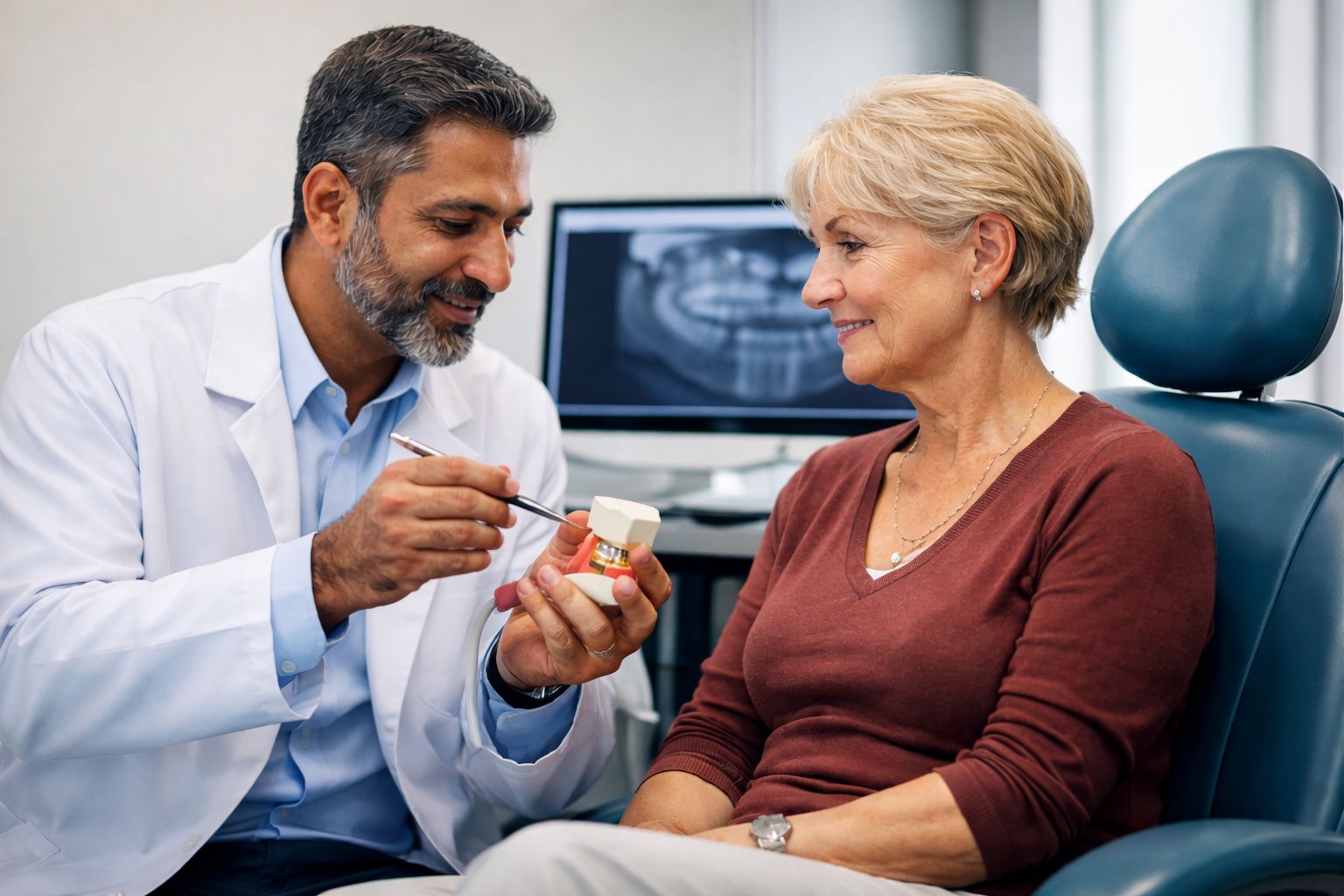
Patient experience isn't about being extra friendly or offering fancy coffee. It's about consistency, clarity, and confidence at every single touchpoint. And the good news? These are things you can control starting today.
### Stop Organizing Around Your Convenience
There's a concept the World Health Organization calls "[person-centered care](https://www.who.int/health-topics/integrated-people-centered-care)"—organizing services around patients' needs and preferences, not around what's easiest for your practice schedule or workflow.
Sounds obvious, right? But think about how often treatment plans are structured around your lab turnaround times or your preferred surgical days rather than what works best for the patient's life.
Person-centered care in implant dentistry means every conversation, consent form, and treatment plan is built around clarity for the patient. Use plain language for everything, especially when discussing bone grafting or staged loading. Give written plans and fee estimates before surgery—and update them if anything changes. This prevents confusion and builds trust.
Before every consultation, ask yourself one question: Does this patient fully understand the "why" behind my recommendation? If you're not sure, slow down and explain it again. Your expertise means nothing if patients can't grasp what you're proposing.
Every Touchpoint Shapes Perception
Good communication shouldn't depend on whether your most charming team member is working that day. It should be systematized so it's consistent regardless of who's handling which part of the patient journey.
Research across healthcare shows that well-coordinated communication lowers patient anxiety and significantly reduces malpractice risk ([National Library of Medicine, 2024](https://pmc.ncbi.nlm.nih.gov/articles/PMC11225999/)). But most practices leave communication to individual personalities rather than building reliable systems.
Create a ten-minute pre-op briefing protocol: Who welcomes the patient? Who confirms consent? Who explains post-op care? Script the tough conversations—how you'll discuss bone limitations, unexpected costs, or alternative treatment plans. When a case moves from consultation to surgery or to the lab, use a handover checklist so your notes and tone stay consistent.
Here's a practical framework experienced clinicians use: At every major decision point, employ the "teach-back" method. After explaining a treatment concept, ask the patient to explain it back to you in their own words. This isn't condescending—it's confirming comprehension. You'll be surprised how often what you thought was clear communication was actually confusing medical jargon.
Practice saying this phrase: "Here's what's most important for you to know today." It focuses attention and reassures patients that you're guiding the process confidently.
Close the Loop with Feedback You Actually Use
You can't fix what you don't measure. Borrow a simple model from the NHS: ask every patient after treatment, "Would you recommend our clinic to a friend or family member?" Then include one open question: "What could we do better?"
Use a QR code or tablet to make it quick and anonymous. Review responses monthly with your team. Identify one small improvement each cycle—shorter waiting times, clearer follow-up instructions, better pre-op communication.
But here's the critical part most practices miss: closing the feedback loop publicly. Post a small notice at reception: "You told us... We changed..." Patients love knowing their feedback actually mattered. This transforms feedback from a box-checking exercise into genuine practice improvement that patients witness.
Even negative feedback becomes an asset when you demonstrate responsiveness. A patient who complained about long waiting times and then sees you've adjusted scheduling becomes more loyal than one who never had a complaint in the first place.
Align Your Promise with Your Practice
Many implant clinics promote "advanced technology" or "premium implants," but patients don't judge technology—they judge how it makes them feel throughout the process.
Here's an exercise worth doing quarterly: Audit your website, your reception area messaging, and your post-surgery documents. Do they sound consistent with your actual in-person tone? Is there a gap between what you promise and what you deliver?
The most successful implant practices don't necessarily have the flashiest marketing. They have the most aligned messaging—what they say matches what patients experience. That consistency builds trust far more effectively than impressive claims.
The clearest message wins, not the flashiest.
Safety Is Service
Cleanliness, consent documentation, and traceability aren't background details—they're fundamental service elements that patients notice and evaluate constantly.
Display your sterilization flow where patients can see it. Follow surgical time-outs even for routine cases. Record implant lot numbers meticulously. Explain your infection control protocols when patients ask (and some will).
Transparency has become the new standard of professionalism, particularly in European markets where patients expect to understand the systems protecting them. Patients notice when you're meticulous about these details, and it signals that you'll be equally meticulous about their treatment.
The Bottom Line
Outstanding patient experience isn't a smile at reception—it's a chain of small, intentional actions that add up to something patients can feel: clear communication, structured systems, feedback you act on, and visible safety protocols.
When these become habits in your practice, your service becomes as reliable as your surgery. And that's when patients stop just accepting treatment and start enthusiastically referring their friends.
The dentists who master this understand something fundamental: clinical excellence gets patients through treatment successfully, but experience excellence gets them talking about you afterward. You need both.
When you're ready to back your exceptional patient care with proven implant systems, explore Alpha-Bio Tec solutions at [**www.alpha-bio.net**](https://www.alpha-bio.net/).
---
**For more information about our implant systems and clinical resources, visit **[**www.alpha-bio.net**](https://www.alpha-bio.net/)**.**
## Related Blogs
Clinics Marketing
##### [.png) Seven Myths Your Implant Patients Bring to the First Consult](https://blog.alpha-bio.net/seven-myths-your-implant-patients-bring-to-the-first-consult)
Clinics Marketing
##### [.png) The Pricing Conversation No One Taught You in Dental School](https://blog.alpha-bio.net/the-pricing-conversation-no-one-taught-you-in-dental-school)
Clinics Marketing
##### [.png) The Team Meeting That Actually Improves Your Dental Practice](https://blog.alpha-bio.net/the-team-meeting-that-actually-improves-your-dental-practice)
Clinics Marketing
##### [.png) Why Your Implant Patients Ghost You (And How to Fix It)](https://blog.alpha-bio.net/why-your-implant-patients-ghost-you-and-how-to-fix-it)
Clinics Marketing
##### [.png) Your Waiting Room Is Killing Your Conversions](https://blog.alpha-bio.net/your-waiting-room-is-killing-your-conversions)
Clinics Marketing
##### [ The Psychology of a Loyal Implant Patient: Why Small Moments Matter More Than You Think](https://blog.alpha-bio.net/the-psychology-of-a-loyal-implant-patient-why-small-moments-matter-more-than-you-think)
[](https://alpha-bio.net/) 
- [PRACTICE](https://blog.alpha-bio.net#practice)
- [Clinical](https://blog.alpha-bio.net/#clinical)
- [Education](https://blog.alpha-bio.net/#education)
- [Science](https://blog.alpha-bio.net/#science)
- [BUSINESS](https://blog.alpha-bio.net#business)
- [Business Growth](https://blog.alpha-bio.net/#business-growth)
- [Patient Care](https://blog.alpha-bio.net/#patient-care)
- [COMMUNITY](https://blog.alpha-bio.net#community)
- [Inspiration](https://blog.alpha-bio.net/#inspiration)
- [Contribution](https://blog.alpha-bio.net/#contribution)
- [Collaboration](https://blog.alpha-bio.net/#collaboration)
## Stay Updated
-
-
-
```json
{
"@context" : "https://schema.org",
"@type" : "BlogPosting",
"author" : {
"@type" : "Person",
"name" : "TheLink Editorial Team",
"url" : "https://blog.alpha-bio.net/author/thelink-editorial-team"
},
"dateModified" : "2026-05-27T15:00:03.546Z",
"datePublished" : "2026-05-27T15:00:03.000Z",
"headline" : "The Patient Experience Details That Actually Matter in Implant Dentistry",
"image" : [ "https://blog.alpha-bio.net/hubfs/Untitled%20design-Jan-01-2026-12-24-39-6461-PM.png" ],
"mainEntityOfPage" : {
"@id" : "https://blog.alpha-bio.net/the-patient-experience-details-that-actually-matter-in-implant-dentistry",
"@type" : "WebPage"
},
"publisher" : {
"@type" : "Organization",
"logo" : {
"@type" : "ImageObject",
"url" : "https://blog.alpha-bio.net/hubfs/Alpha_Biotec_logo.png"
},
"name" : "DH Dental Business Services, LLC"
}
}
```